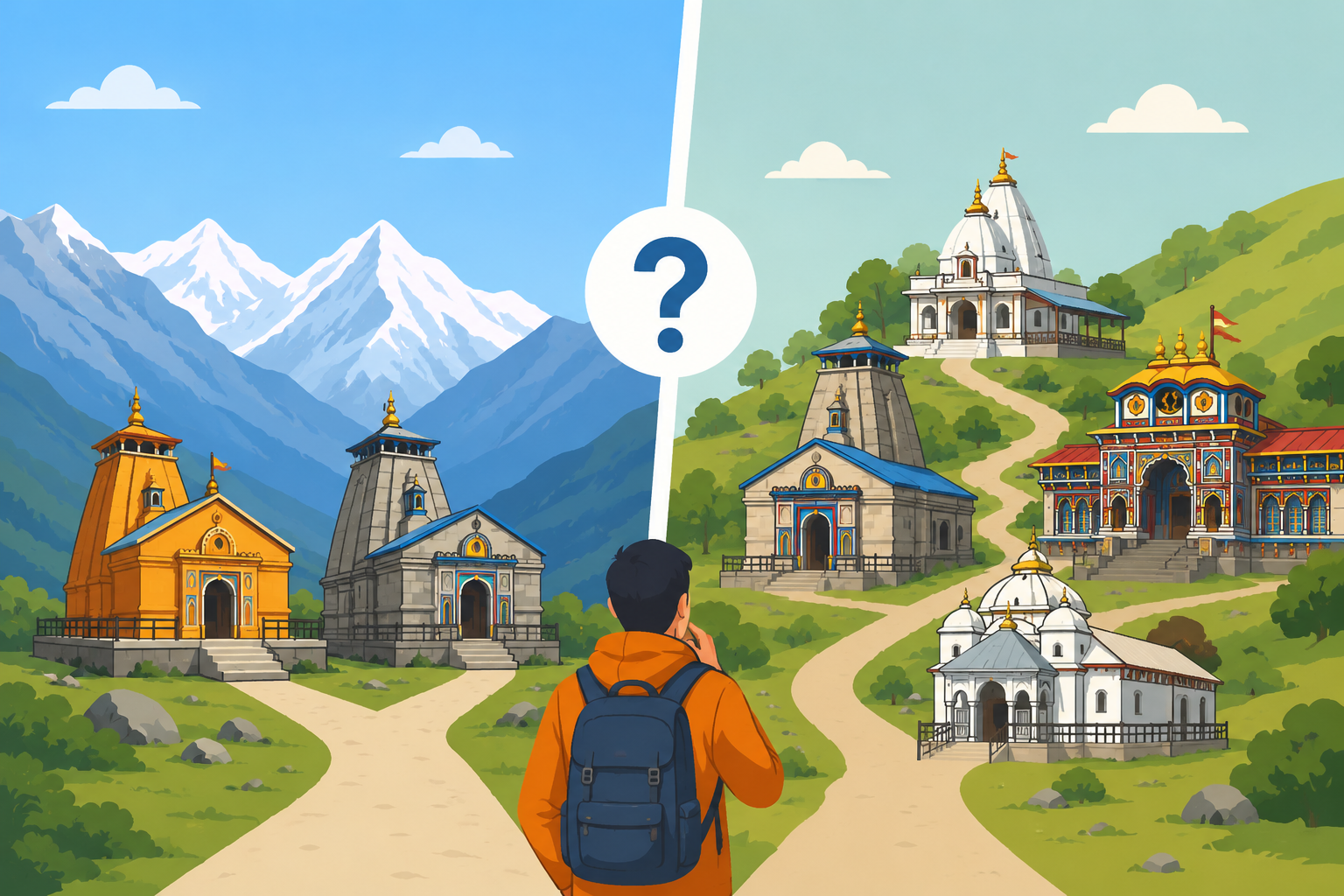
Planning a trip up into the Himalayas isn’t just about ticking boxes on a bucket list; it is a deeply personal, life-changing journey. But the moment you sit down to plan, you hit a massive fork in the road: Should you choose the Do Dham or the Char Dham Yatra for 2026?
Both paths promise incredible mountain views, a deep sense of inner peace, and stories you will tell for the rest of your life. But honestly, they require completely different commitments when it comes to your time, your wallet, and your physical stamina.
Picking the wrong package can quickly turn a beautiful spiritual journey into an exhausting, stressful trek. Let’s sit down, cut through the confusing travel jargon, and look at the real ground realities so you can choose the path that actually fits your life.
What is Do Dham Yatra?
“Do Dham” simply means “two holy places.” When people talk about this specific route in Uttarakhand, they are almost always talking about visiting Kedarnath and Badrinath.
- Kedarnath: This ancient temple sits high up at 11,755 feet, framed by massive, snow-covered peaks. Dedicated to Lord Shiva, it holds an incredibly powerful, raw energy that draws millions every year.
- Badrinath: Located a bit lower down at 10,170 feet along the rushing Alaknanda River, this bright and beautiful temple is dedicated to Lord Vishnu and sits tucked quietly between two giant mountain guards, the Nar and Narayana peaks.
By focusing entirely on these two major spiritual hubs, a Do Dham trip skips the first couple of stops of the traditional circuit. It gets you straight to the two most famous temples in the region.
What is Char Dham Yatra?
The Char Dham Yatra is the ultimate, complete loop. It takes you to four different sacred places in a specific, time-tested sequence. According to local tradition, you always travel from West to East, which matches the natural flow of the mountains and the rivers.
If you choose the full loop, your journey will look like this:
- Yamunotri: The high starting point where the holy Yamuna River begins.
- Gangotri: A gorgeous valley where the sacred Ganga River first flows down to Earth.
- Kedarnath: The steep, high-altitude home of Lord Shiva.
- Badrinath: The grand finale of the entire trip, dedicated to Lord Vishnu.
Completing all four stops is widely seen as a true spiritual reset, a way to leave behind old baggage and start fresh with a clear mind.
Side-by-Side Comparison: Days, Cost, and Effort
To see how these two trips actually feel when you are out on the road, let’s look at them side by side:
| Feature | Do Dham Yatra (Kedarnath & Badrinath) | Full Char Dham Yatra |
| Time Needed | 5 to 6 Days | 10 to 12 Days |
| Total Driving Distance | Around 500 km round trip from Rishikesh | Well over 1,000 km for the whole loop |
| Walking and Trekking | One major 16 to 18 km walk up to Kedarnath | Two tough walks: 6 km at Yamunotri plus the 16 to 18 km at Kedarnath |
| What You’ll Spend | Friendly on the budget and easier to manage | A bigger financial investment since you double your fuel, food, and stays |
| Physical Toll | High intensity but over quickly, mostly at Kedarnath | A true test of endurance with over 10 days of continuous mountain travel |
| When to Go | May to June or September to October | May to June or September to October |
Who Should Choose Do Dham?
The Do Dham package is a smart, realistic alternative. It is probably your best bet if:
- You Are Short on Time: If you run a business or have a demanding job and can’t afford to disappear for two whole weeks, this route lets you complete your pilgrimage over a single week or an extended long weekend.
- You Want to Keep Costs Down: Since you are cutting your travel distance and hotel nights exactly in half, it is much easier on your bank account.
- Your Heart is Set on Shiva and Vishnu: If your main spiritual connection is with these two specific deities, this path gets you right to them without extra days on the road.
Who Should Go for the Full Char Dham?
The full four-temple loop is a beautiful adventure, but it demands your full dedication. This is the right choice for you if:
- You Want the Full, Traditional Experience: If you want to follow the ancient path exactly, cleansing your spirit at the river sources before visiting the major temples, this is the only way to do it.
- You Have Steady Stamina: Spending nearly two weeks straight in a vehicle navigating winding, bumpy mountain roads takes a real physical and mental toll.
- You Can Slow Down: If you have the flexibility in your schedule and budget to take your time, enjoy the local culture, and enjoy how the landscape changes from valley to valley.
How to Book Your Trip from Rishikesh for 2026
Rishikesh is widely known as the Gateway to the Gods, and it is easily the best place to start either journey. The town has great transit connections, local guide networks, and the main registration offices.
Step 1: Get Your Government Registration
Before you book a single hotel room or taxi, you have to register with the state government. They use this information to keep everyone safe during unexpected mountain weather.
- Online: It is completely free. You can do it on the official website at the Uttarakhand Tourist Care Portal or by downloading the official Tourist Care Uttarakhand smartphone app.
- In Person: If you show up without an online pass, just head to the walk-in counters at the Rishikesh ISBT bus station to get a physical slip.
Step 2: Figure Out Your Transport
- By Road: You can book a private cab like an Innova or a Bolero, or grab a seat in a shared traveler bus. Just make sure the vehicle has a valid mountain fitness permit, locally called a Green Card.
- By Air: If you want to skip the long, painful walk up to Kedarnath, you can book a helicopter shuttle. Make sure to use only the official IRCTC Heli Yatra Portal to book your tickets and avoid common online ticketing scams.
Step 3: Book Your Places to Stay Early
Rooms fill up incredibly fast during the popular months of May and June. It is always smart to check for accommodation options through the official Garhwal Mandal Vikas Nigam (GMVN) website or book trusted local hotels ahead of time so you don’t end up stranded without a room.
Quick Questions and Answers
Can Do Dham be done in 5 days?
Yes, you can pull off a Do Dham trip in 5 days from Rishikesh, but you will be moving fast. A normal schedule looks like this:
- Day 1: Drive from Rishikesh to the base area of Guptkashi or Sonprayag.
- Day 2: Walk up the tough trail from Gaurikund to Kedarnath and stay the night at the top.
- Day 3: Walk back down the mountain and drive straight over toward Badrinath.
- Day 4: Visit the Badrinath temple in the morning, check out the nearby Mana Village, and start driving back down to Rudraprayag.
- Day 5: Finish the drive back to Rishikesh.
It works, but it leaves absolutely zero room for rest, heavy traffic, or sudden mountain weather changes.
Is Do Dham a good option for senior citizens?
Yes, Do Dham is usually much easier on seniors than the full loop because it cuts out days of exhausting road travel.
That said, the steep walk up to Kedarnath is no joke. If you are traveling with elderly parents or grandparents, it is highly recommended to bypass the walk entirely. Try to book a helicopter ride from towns like Phata or Sirsi, or arrange for a local pony or palanquin service well before you arrive. This keeps the trip safe, respectful, and genuinely peaceful for them.