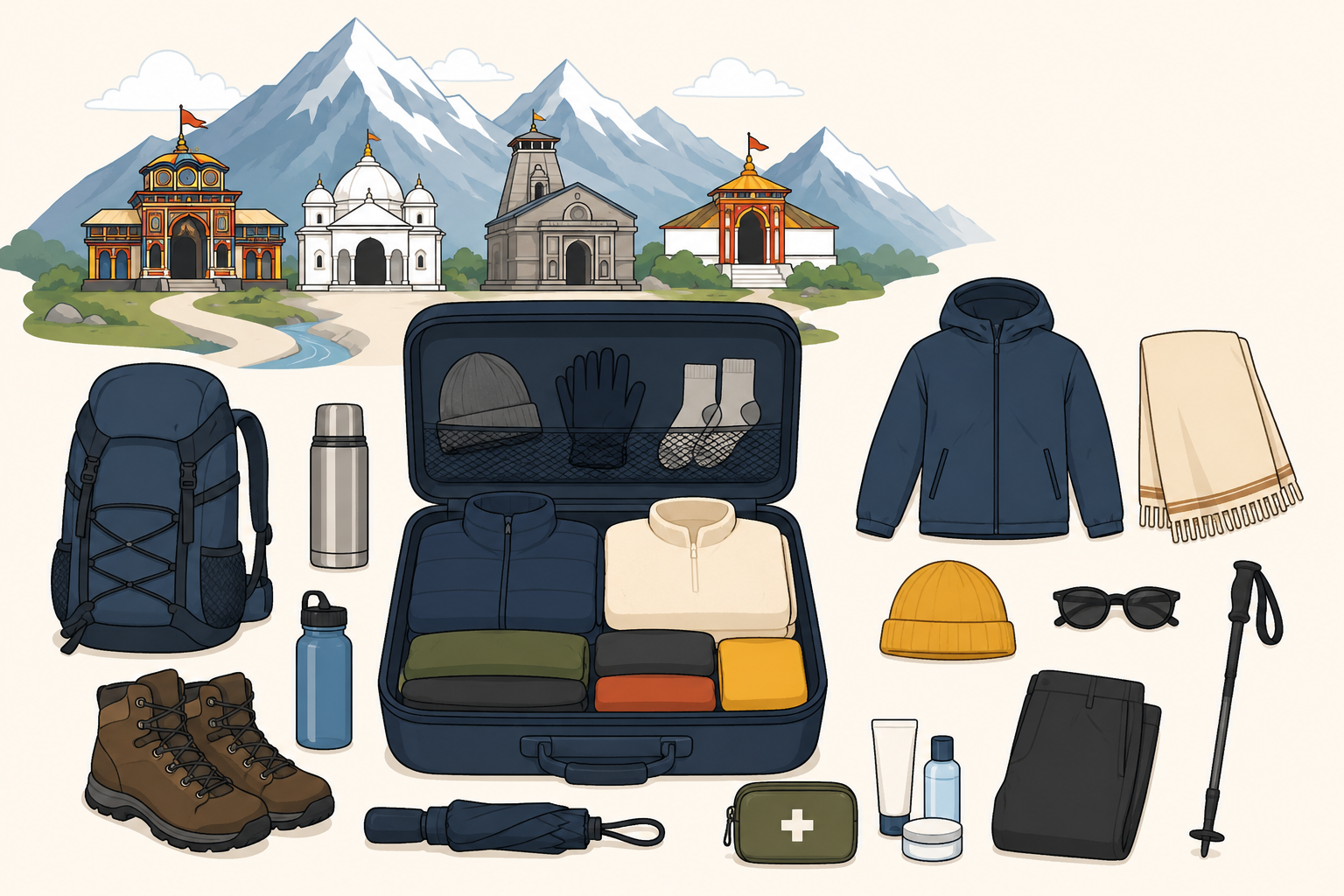
There is a specific moment, usually when you first catch sight of the giant snow-capped peaks of the Garhwal Himalayas, where everything goes quiet inside you. The air smells different, the mountains look impossibly massive, and you realize you are finally here. The Char Dham Yatra is a deeply spiritual journey through Yamunotri, Gangotri, Kedarnath, and Badrinath. Before you pack a single bag, make sure you complete your mandatory registration on the official Uttarakhand Tourist Care Portal. It is a path of faith that millions walk, but we also have to talk about the physical reality. These holy shrines sit high up in the mountains, and the climb will test your body in ways you might not expect.
If you are currently sitting at home looking at an empty suitcase, wondering what to pack for Char Dham Yatra, it is completely normal to feel a bit overwhelmed. You are planning a trip that starts in the warm, humid valleys and climbs all the way up to freezing, wind-swept peaks. Normal vacation packing rules just do not apply here.
It does not matter if you plan to walk every single mile, take a pony, or travel by helicopter. Packing the right things is the secret to keeping your focus on your prayers instead of fighting the freezing cold and wet weather. Let us walk through the true Char Dham travel essentials 2026 so you can pack smart, stay warm, and fully embrace this beautiful experience.
Understanding the Weather Patterns in High-Altitude Dhams
Before you throw a single shirt into your bag, you have to understand the unique personality of the Himalayan weather. These sacred sites are located at extreme altitudes. Badrinath sits at 3,133 meters, while the steep climb to Kedarnath takes you all the way up to 3,583 meters.
+------------------+------------------+------------------------------------+
| Dham             | Altitude (m)     | Average Temp Range (May to Oct)    |
+------------------+------------------+------------------------------------+
| Yamunotri        | 3,293 m          | 6°C to 20°C (Can drop below zero)  |
| Gangotri         | 3,140 m          | 5°C to 18°C                        |
| Kedarnath        | 3,583 m          | -2°C to 15°C (Highly unpredictable)|
| Badrinath        | 3,133 m          | 5°C to 16°C                        |
+------------------+------------------+------------------------------------+
Because the air is so thin up there, the sun can feel incredibly hot and sharp on your skin during the day. You can keep a close eye on route conditions and seasonal advisories through the Uttarakhand Tourism Development Board portal. But the moment a cloud rolls in, or as soon as the sun dips behind a mountain peak, the temperature plummets instantly. You can easily experience biting winds, sudden downpours, and even unexpected snow showers all in a single afternoon. Your main goal when packing is to bring clothing that you can easily put on or take off as the sky changes.
Layering Guide: Essential Warm Clothing for Cold Himalayan Nights
When you are choosing your clothing for Kedarnath trek and the rest of your trip, please leave your heavy cotton sweaters behind. Cotton is a nightmare in the mountains. It absorbs your sweat like a sponge and takes forever to dry, which will leave you shivering the second you stop moving. Instead, rely on a simple three-layer system that keeps you warm without weighing down your bag.
The First Layer (Your Base)
You need two or three pairs of high-quality thermal tops and bottoms. Choose synthetic materials or Merino wool. This layer sits right against your skin to pull sweat away from your body while you walk up the steep trails, keeping you dry and comfortable.
The Second Layer (Your Warmth)
This is your insulation. Pack a lightweight fleece jacket or a warm, compressible down jacket. Down jackets are absolute lifesavers because they fold down into a tiny ball, leaving plenty of room in your backpack.
The Third Layer (Your Shield)
You need a windproof and waterproof outer jacket. If you are traveling in the colder months of May or October, make sure this outer jacket is heavy and well-insulated. It will be your main defense against freezing mountain winds and sudden rain.
Little Items That Make a Big Difference
We lose a massive amount of body heat from our head, hands, and feet. Do not forget to pack these small but crucial accessories:
- A Warm Beanie or Balaclava: You will desperately need this to protect your ears and head during those freezing nights in Kedarnath.
- Good Gloves: Waterproof gloves are highly recommended, especially if you plan on holding walking poles while it is raining.
- Thick Wool Socks: Pack at least three or four pairs. They cushion your steps, prevent painful blisters, and keep your toes warm even if your shoes get a little damp.
Footwear and Trekking Gear for Yamunotri and Kedarnath
Your feet are going to do some incredible, heavy work on this journey. The walk up to Yamunotri is a steep 6 kilometers, and the trek to Kedarnath is a long, demanding path of 16 to 22 kilometers depending on your starting point. You must treat your feet with the utmost care.
What kind of shoes are best for the Kedarnath trek?
The absolute best shoes for this journey are sturdy, water-resistant hiking shoes with deep rubber grips and solid ankle support.
The trails are a mixture of steep concrete paths, loose gravel, slippery mud, and stone steps that can get very slick from water and mule droppings. Please avoid wearing flat sneakers, running shoes with smooth soles, plastic clogs, or open sandals. They do not have the grip you need to stay safe, and they will let water in, leaving you with cold, wet, and miserable feet.
A very important piece of advice: buy your shoes at least a month before your trip and wear them regularly to break them in. Walking on a long mountain trail in brand-new shoes will guarantee painful blisters, which can quickly ruin your entire pilgrimage.
Essential Trekking Gear
- A Walking Pole: This is not just an accessory; it is a lifesaver. A walking pole takes a massive amount of pressure off your knees when you are heading downhill and helps you keep your balance on wet, uneven steps.
- Good Sunglasses: The sun is incredibly bright at high altitudes, especially if there is still snow on the peaks. Sunglasses will protect your eyes from harsh glare and prevent headaches.
Rain Protection: Ponchos vs. Umbrellas in Landslide Zones
Rain is almost a guarantee at some point during your Uttarakhand pilgrimage. However, how you choose to stay dry can actually affect your safety on the trails.
While you will see many local pilgrims carrying standard umbrellas, a heavy-duty rain poncho is far better and safer when you are navigating narrow mountain paths.
+----------------------------+------------------------------------------+------------------------------------------+
| Feature                    | Heavy-Duty Rain Poncho                   | Standard Umbrella                        |
+----------------------------+------------------------------------------+------------------------------------------+
| Hand Freedom               | High (Keeps hands free for poles/ropes)  | Low (Occupies one hand completely)       |
| Wind Resistance            | Excellent (Stays close to your body)     | Poor (Can turn inside out in the wind)   |
| Backpack Protection        | Yes (Covers you and your bag)            | No (Your backpack gets wet)              |
| Safety on Narrow Paths     | Safe                                     | Dangerous (Blocks your view of the path) |
+----------------------------+------------------------------------------+------------------------------------------+
When you are walking on steep, crowded trails, you need your hands completely free to hold onto safety railings, use your walking pole, or catch your balance. A reusable, heavy-duty waterproof poncho that fits right over you and your backpack is easily one of the most important things to carry for Uttarakhand pilgrimage.
First Aid and Mandatory Personal Medications to Carry
There are basic medical tents along the route, but they can be hours away when you are high up on a mountain path. Carrying your own small first-aid kit is essential for your peace of mind.
- For Altitude Sickness: Talk to your doctor before leaving home about Acetazolamide (often called Diamox). You can read more about safe acclimatization strategies in the CDC’s official guide to high-altitude travel. It helps your body adjust to the thin mountain air.
- For Pain and Soreness: Bring basic painkillers like Ibuprofen or Paracetamol for headaches and body aches. A pain-relief spray or gel is amazing for soothing sore knees and calves at the end of a long day.
- For Motion and Stomach Sickness: The mountain roads are full of sharp, winding hairpin turns that can make even the strongest stomachs feel incredibly motion-sick. Pack medicine for nausea and basic tablets for an upset stomach.
- For Blisters: Pack plenty of adhesive bandages, antiseptic cream, medical tape, and specialized blister pads.
- Your Daily Medications: If you take daily medicines for blood pressure, diabetes, or thyroid conditions, bring enough to last an extra four or five days. Landslides can sometimes block roads temporarily, and you do not want to run out of your critical medications while waiting for the roads to clear.
Smart Packing Hacks: Keeping Your Luggage Light and Portable
When you are packing, remember this simple rule of the mountains: every single extra gram of weight feels twice as heavy after a few hours of walking uphill.
Is it necessary to carry cash, or are digital payments widely accepted in the Dhams?
Even though digital payment systems like UPI have become incredibly popular across India, carrying a good amount of physical cash is absolutely mandatory.
Mobile phone signals are highly unreliable in deep mountain valleys and high peaks. If there is a power outage, the local cell towers can go down for days, making digital payments completely impossible.
Keep a safe supply of cash in small, easy-to-use notes like 100, 200, and 500 rupees. You will need this to pay for local food, horse rides, porters, and emergency shelter. Do not rely on finding working ATMs in the hills, as they are very often out of service or completely out of cash.
Quick Packing Tips
- The Daypack Strategy: Leave your heavy suitcases at your hotel base in Haridwar, Rishikesh, or Dehradun. Travel up into the mountains with just a sturdy, comfortable backpack of about 35 to 45 liters.
- Waterproof Your Gear: Before putting your clothes into your backpack, pack them inside heavy-duty plastic bags or dry sacks. If your backpack gets soaked in a sudden downpour, your dry clothes will stay completely protected.
- Power Banks: The cold weather drains phone and camera batteries much faster than normal. Bring a high-capacity power bank and keep it in an inner pocket close to your body heat to preserve its charge.
Final Thoughts: Prepare Well, Journey Deep
The Char Dham Yatra is a truly beautiful, life-changing pilgrimage. When you aren’t shivering in wet clothes, nursing painful blisters, or stressing over a dead phone battery, you can fully lose yourself in the breathtaking views and the deep spiritual peace of the Himalayas. By taking the time to pack carefully, you are protecting your health and showing respect to these wild, majestic mountains.
Pack smart, walk safely, and have a beautiful, blessed journey. Jai Badri Vishal! Jai Kedar!