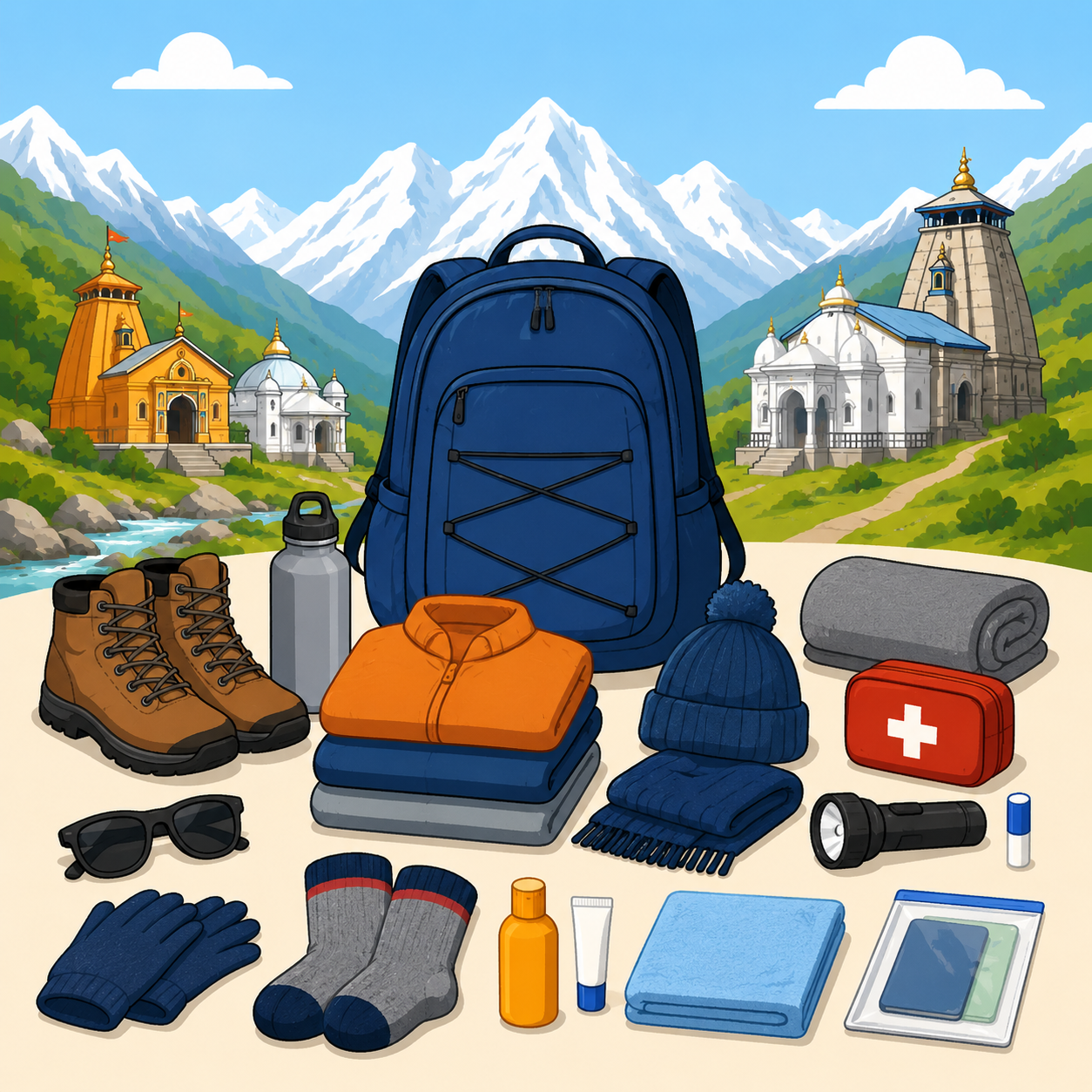
Preparing for the Char Dham Yatra is nothing like packing for a standard vacation. If you overstuff your bag, you will spend the entire trip exhausted from lugging it around. But if you pack too little, you will find yourself shivering in a freezing, remote mountain town wishing you had brought that extra sweater.
With unpredictable mountain weather and strict digital rules for pilgrims, your packing list needs to be practical, light, and smart. Here is a down-to-earth guide on exactly what to put in your backpack, what you can safely buy on the road, and what you should leave at home.
Clothing: Think Layers, Not Heavy Bulk
The most common mistake people make is packing giant, heavy jackets or thick woollen coats that take up half a suitcase.
The weather up at Kedarnath and Badrinath changes in a heartbeat. During the day, temperatures usually stay around a comfortable 12°C to 18°C while you are moving. But as soon as the sun goes down, that warmth vanishes. It often drops to 3°C or even below freezing at night.
Instead of carrying one massive, bulky jacket, pack smart layers. This makes it easy to add or remove clothes as you travel from the warmer valleys up to the chilly mountain heights.
- 3 Thermal Tops and Bottoms: Good quality thermals are your best friend. Wear them right against your skin to hold in your body heat.
- Quick-Dry Trekking Pants (2 to 3 pairs): Leave the jeans at home. If jeans get wet from rain or sweat, they take days to dry and become incredibly heavy to walk in.
- Fleece or Down Jacket: One lightweight down jacket combined with a fleece sweater will keep you warmer and feel much lighter than multiple heavy sweaters.
- Waterproof Outer Layer or Good Poncho: Rain showers happen out of nowhere in the mountains. A reliable waterproof and windproof jacket is an absolute lifesaver.
- Warm Accessories: Bring two pairs of thick woollen socks, a good beanie that covers your ears, and gloves that protect against the cold wind.
Footwear: The Most Important Choice You Will Make
Your shoes can truly make or break your trip, especially during the long 16 kilometer walk up to Kedarnath. This journey is definitely not the time to wear brand new, stiff shoes or flat sneakers.
- Trekking Shoes with Strong Grip: Choose worn-in shoes that offer good ankle support and can handle a bit of water. The paths are often muddy, rocky, and slippery from loose gravel or melting snow.
- Good Socks: Pack 4 to 5 pairs of thick sports socks or wool socks. Change them often to keep your feet completely dry and avoid painful blisters.
- Simple Slippers or Sandals: Keep a light pair of slip-ons in your bag to wear when you visit the temples or rest at your hotel after a long day.
Medical and First Aid Essentials
You will find small pharmacies along the path, but when you are high up on a mountain trail, you need to have basic medicine right with you. Altitude sickness can happen to anyone, no matter how fit or healthy you feel.
- Altitude Sickness Medicine: Speak with your doctor before you leave the house and carry the recommended tablets.
- Pain Relief: Bring basic painkillers, band-aids, and muscle relief sprays or creams to soothe aching legs and backs.
- Your Regular Prescriptions: Bring a 15 day supply of any daily medicine you take, along with the physical note from your doctor.
- Basic First Aid: Pack tablets for motion sickness on the winding roads, antacids for stomach issues, rehydration salts, and basic cold medicine.
Documents You Cannot Forget (Including Your Registration QR Code)
The government strictly manages the number of pilgrims to keep everyone safe on the mountains. You cannot just turn up and expect to get in without the right paperwork.
- Char Dham Registration QR Code: Registration is absolutely mandatory. You must complete your paperwork in advance via the Uttarakhand Tourist Care Registration Portal. Keep a printed copy of your registration form and the QR code, and save a digital copy on your phone.
- Valid ID Card: Bring your Aadhaar Card, Voter ID, or Passport. Carry the original ID and at least three paper copies.
- Passport Photos: Keep 4 or 5 small photos handy for local permits or emergency forms.
Tech and Navigation Items
The cold mountain air drains phone batteries much faster than usual. Also, do not expect fast internet or easy access to wall plugs everywhere you go.
- High-Capacity Power Bank: A strong, reliable power bank is absolutely necessary. Phone batteries die incredibly fast in the freezing cold at Kedarnath and Badrinath.
- Two Different SIM Cards: Network performance varies wildly by location on this trek. According to the Chardham Tour Network Connectivity Guide, BSNL remains the only reliable network for voice calls on the actual trails, while Reliance Jio offers great data speeds right inside the main temple campuses. Carrying both ensures you stay connected.
- Offline Maps and Screenshots: Download Google Maps for the Uttarakhand region so you can use it without internet. Take screenshots of your hotel bookings and registration details too.
What You Can Buy Along the Route
To keep your bag as light as possible, remember that you can get a lot of items on the way. Local shops line the paths to help travelers, so you do not need to pack everything from home.
- Walking Sticks: Simple wooden trekking sticks are sold at the start of all major walks for a very low price. They help immensely with balance.
- Cheap Ponchos: If your main jacket gets soaked, you can buy simple plastic ponchos almost anywhere on the trail.
- Snacks and Water: Plenty of small stalls sell hot tea, bottled water, energy snacks, and instant noodles. Carry a reusable flask and refill it with hot water at these shops.
Quick Answers to Big Questions
How cold does it get at Badrinath and Kedarnath?
It gets much colder than most people expect. During the popular travel months, daytime temperatures at the temples hover around 10°C to 15°C, which feels quite nice while you are walking. However, once the sun sets or if it starts raining, the temperature quickly drops to 5°C, and it often goes below freezing in early May or late October. Dressing in layers is the best way to stay comfortable.
Should I carry cash or are there ATMs available?
You must carry enough physical cash with you. Even though online phone payments are growing across India, the mobile network in high mountain zones is very unreliable. The ATMs on the route often run out of cash or stop working during power outages. Withdraw plenty of cash while you are still in larger towns like Haridwar, Rishikesh, or Dehradun to pay for your local transport, food, porters, and emergency needs.